
Here are 3 ways to ditch the chemicals, save money, and get glowing—the natural way!
Want to reduce the amount of chemicals in your life? Here are 3 easy and inexpensive ways to get started!
Get Glowing And Remove Makeup With Grapeseed Oil.
Grapeseed oil is suitable for a wide range of skins types, and has anti-aging antioxidants. It won’t clog pores, and it can also help prevent wrinkles that come with premature aging by blocking damaging free radicals. Three to four drops per application should be all you need, and you can apply with your fingers or using a cotton pad. Grapeseed Oil is also an eye makeup remover – mascara, eyeliner, and eye shadow—all gone while moisturizing the sensitive eye area.
Argan Oil For Silky, Sleek Locks.
Argan Oil is a key ingredient in many popular hair products, but you can cut out the chemicals and fillers used in many of these products by using Argan Oil in its pure form. You’ll tame frizz and lock in moisture by adding a couple drops of this fatty-acid-rich oil to the ends of your hair. Apply while it is still damp; then dry and style as usual.
Pamper Yourself With Coconut Oil Body Scrub.
Coconut oil could be the most versatile natural beauty product. Packed with vitamin E and fatty acids, it is anti-fungal, anti-viral and anti-bacterial. Coconut Oil is a “super-oil” that can be used for everything from dry hair to athlete’s foot.
If you want to avoid the sodium laureth sulfate present in most body washes and scrubs, use coconut oil as a homemade body scrub – it’s great for sensitive skin. It takes just two to three simple ingredients: coconut oil, sugar, and an essential oil, such as lavender (optional). Use two-parts sugar to one-part coconut oil; just warm the oil (microwave works well) and stir in the sugar and essential oil. Coconut Oil for use on the skin should be organic, virgin or extra-virgin, unrefined, and cold pressed.

OUR TOP 3 NATURAL BEAUTY SECRETS
Related Posts

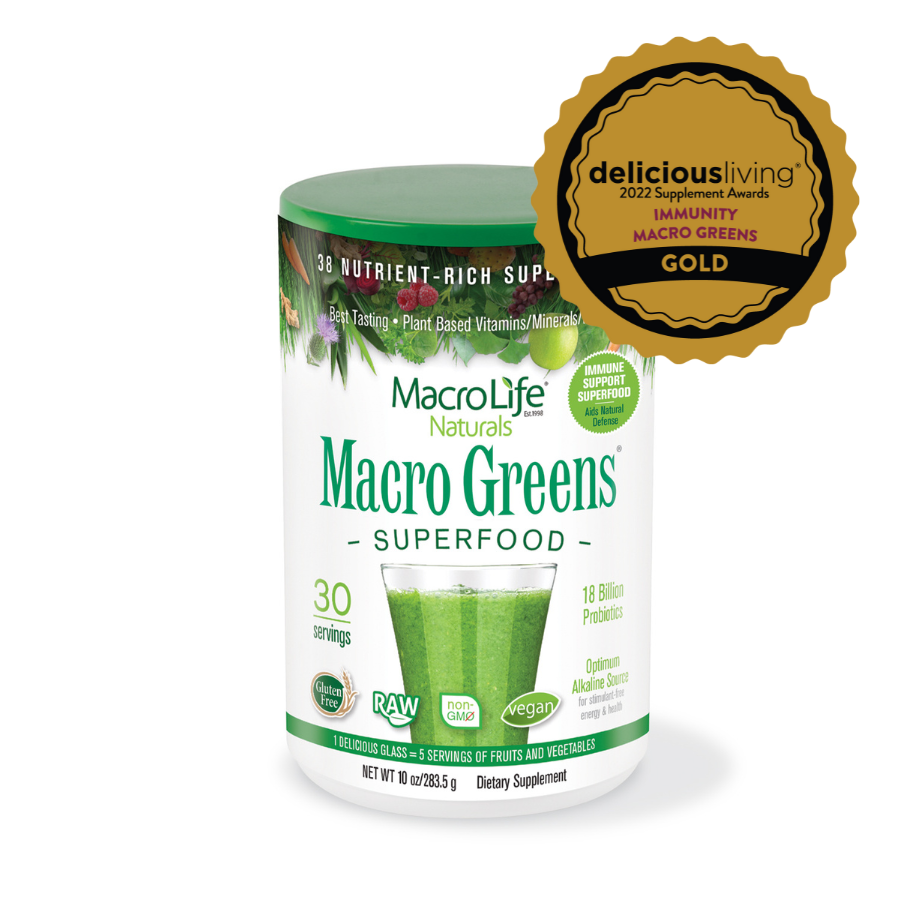
Macro Greens - Barley Grass
Barley grass juice powder benefits and how to use it:If you have ever compared two green powders and wondered why one costs three times the other, the answer is usually sitting in the first line of the ingredient list. Barley grass juice powder benefits come from a different raw material than the barley grass powder most blends use, and the gap between them is not small. You are looking at a concentration difference, a processing difference, and a taste difference. All three change whether the tub gets finished or abandoned. MacroLife Naturals has been formulating around this ingredient since 1998, when Sylvia Ortiz built her first green blend with Dr. Edward Wagner, a holistic chiropractor. Twenty-eight years of reformulating the same ingredient teaches a company where the shortcuts are. What barley grass juice powder actually is:Barley grass juice powder is made by pressing the juice out of young barley grass and drying only that juice, leaving the indigestible fiber behind. Standard barley grass powder is the whole leaf, dried and milled, fiber included. That single step is where the concentration comes from. Because the fiber is removed before drying, the resulting powder can be up to 10 times more potent than a standard grass powder by weight. It also dissolves better rather than settling, which is why juice powder blends mix smooth and whole-grass blends go gritty at the bottom of the glass. The flavor follows the same logic: less leaf (fiber) material means less of the grassy, hay-like note people describe when they say a greens powder tastes like you mowed your front lawn. Why cold processing decides what survives:Cold processing dries and blends ingredients at low temperatures, protecting the enzymes, heat-sensitive nutrients and live probiotic cultures that high-temperature processing destroys. This matters more than most labels admit. A probiotic count printed on a tub is measured at blending, not at consumption, and heat is the most common thing that gets to it in between. A blend that carries 18 billion CFU alongside prebiotic fibers and plant enzymes only delivers that if the manufacturing never cooked it. The same applies to the juice powder itself: the delicate compounds that make young barley grass worth pressing are exactly the ones a hot drying tunnel removes. Every MacroLife Naturals formula is produced in a cGMP and NSF certified facility, with every ingredient tested for quality and purity before packaging. How to use it without building a new routine:One tablespoon in water, juice or a smoothie, taken at the same point in an existing morning, is enough. The habit sticks when it attaches to something already happening rather than becoming its own step. Mixing works best in a glass with a little liquid first, then the rest, which stops clumping. Cold liquid is fine and heat is not, since the enzymes and probiotics that survived manufacturing won't survive hot coffee. Macro Greens folds 38 superfoods around its barley grass juice base, including spirulina, chlorella, aloe vera and organic beet, so one glass covers a lot of ground for someone who is not going to eat five servings of vegetables before nine in the morning. Taste is worth taking seriously here, since the powder that gets finished is the one that works. You don't need a new routine, a blender, or ten minutes you don't have. Fill a glass, stir for 15 seconds, and drink it while you are doing something else. Do that tomorrow and the tub becomes a habit instead of another abandoned purchase. FAQs:Is barley grass juice powder gluten free?Young barley grass is harvested before the plant forms grain, so the grass itself contains no gluten. Look for a gluten free mark on the tub, since shared facilities are the real variable rather than the plant. Can you take it on an empty stomach?Yes, and most people prefer it that way. If it feels heavy, take it with a small amount of food for the first week while the prebiotic fibers settle in. How long does an open tub last?Keep it sealed, dry and out of direct sun, and use it within the window printed on the base. Moisture is the enemy, so a dry scoop each time matters more than refrigeration. Does it replace eating vegetables?Treat it as an addition rather than a swap. It fills the gap on the days that get away from you, which for most people is most days, while whole vegetables still bring fiber and volume that no powder replaces.
Learn more
GLP-1 vs. MacroLife Macro Green Superfood
The popularity of GLP-1s antagonists is growing at an incredible rate all over the world. The demand is so high that millions of dollars have been spent trying to find all-natural plant-based substances to mimic the mechanism of action of these drugs. GLP-1s are medications that mimic the effects of a naturally occurring hormone in the body, GLP-1, to help regulate blood sugar levels and promote weight loss. They work by stimulating insulin release, suppressing glucagon, slowing digestion, and increasing feelings of fullness. At MacroLife Naturals, it is our mission to create synergistic formulas that help us live longer to get the most out of life. We transformed this passion into creating our family company after its founder Sylvia Ortiz created Macro Greens in 1998. Sylvia was on a quest to help her son regain his health and cut down the cost and headache of taking 30-40 tablets and capsules a day. After seeing her son JR’s success in trimming down 65 lbs. and getting his digestion and food cravings under control. JR & Sylvia decided to dive deep into researching natural ways to feed the body at the cellular level and produce an environment for multiple systems to thrive. Essentially, we were taking a “Macro” view to health and wellness. This is how MacroLife Naturals was formed 25+ years ago. In doing the research Sylvia, JR, and a Wholestic team formulated the most comprehensive set of superfood and protein powders for the whole family. It is incredible to see that traditional science is proving without a doubt that the right blend of ingredients can have long-term benefits no matter the age your health journey starts. For GLP-1s, the recent research is showing that resveratrol in the right amount per day can increase the total amount of GLP-1 hormone in the blood system however, the test subjects did not report any cognitive effect or measurable overall results by adding one ingredient to the diet. The same limited cognitive were observed when adding the following extracts to the diet separately; green tea extract, curcumin, capsaicin (red pepper extract) among a few others. By adding prebiotics, probiotics into Macro Greens and Miracle Reds it created the best environment possible for efficacy. Thus, bringing us to the conclusion that the body would respond to a synergistic combination of these specific ingredients that naturally increase GLP-1 peptides in the blood stream. On paper, formulating products that work should be relatively easy if you follow indisputable scientific evidence. The tough part is to make sure that the “active” compound(s) that need to reach a specific destination in the gut or in the bloodstream gets there effectively. This is why all MacroLife products contain pre & probiotics as they are commonly catalysts and or co-factor (nutritional chaperone) for many vitamins, minerals, antioxidants, including hormone production. MacroLife’s first product was Macro Greens to a handful of Naturals Food Stores and Wholistic & Naturopathic Doctors in 1998. Most customers at that time would be called “Hippies” or what we call it now being a “Almonds.” Regardless of the name, the connection is that these consumers attempt to live as clean and healthy as possible to enjoy everything the world has the offer. In that spirit, Macro Greens contains 18 billion probiotics, natural prebiotics from apple pectin/fiber, Green Tea extract, along with Aloe Vera, and acerola berry extract to help deliver the right nutrients to the place they need to go. Choose the original Macro Greens superfood when you are ready to jump start your weight and wellness journey. You will be surprised at how delicious natures superfoods can be. That’s why, we say “Add a little to your DAY… Live a MacroLife!” References: ✅ Resveratrol Effects in Humans & Other Models In high-fat diet mice, resveratrol supplementation tripled the active GLP‑1 concentrations in the portal vein, improved glucose tolerance, and raised insulin levels. GLP‑1 receptor knockout mice did not benefit—highlighting GLP‑1 as the mediator of resveratrol’s effects Reddit+15frontiersin.org+15Reddit+15. In obese human males, 30 days of 150 mg/day resveratrol supplementation did not change fasting or postprandial GLP‑1 levels—but did significantly suppress postprandial glucagon (p = 0.01) PubMed+1. Review articles note that while resveratrol may modulate GLP‑1 via gut‑brain axis pathways and microbiota regulation, its direct effect on GLP‑1 release in humans remains controversial PMC+2PubMed+2. ✅ Curcumin, Capsaicin & Green Tea Extract (Limited Evidence on GLP‑1) Curcumin supplementation (70–2400 mg/day over 4–36 weeks) in metabolic syndrome patients significantly reduced body weight, BMI, waist circumference and improved metabolic parameters—but GLP‑1 levels were not assessed directly verywellhealth.com. Capsaicin (≈6 mg/day) in humans over 12 weeks showed mild reductions in BMI and appetite, but no direct GLP‑1 data exists; evidence in humans is limited and mostly negative or inconclusive verywellhealth.com. Green tea extract is widely used, but trials rarely measure GLP‑1. Evidence suggests weight benefit via metabolism or satiety pathways, not proven via GLP‑1 modulation in clinical studies.
Learn more
Miracle Reds Heart Health and Plant Sterols
Are you familiar with the connection between heart health and plant sterols. You may have heard of them. You have no doubt eaten them. And if you want to lower your high cholesterol, you definitely need more of them. We’re talking about plant sterols.Research has shown a direct line between plant sterols and lowering LDL, or “bad,” cholesterol. New studies have also indicated that increasing your intake of plant sterols may help battle three of the most common types of cancer.Before you decide to leap aboard the plant-sterols bandwagon, though, you may have a few questions. For example, are the cholesterol claims really legitimate? Are there any negative health consequences associated with eating too many sterols?Plant sterols are constituents of plants — plant cell walls, to be exact. Plant sterols are far from “new.” They were discovered in 1922, and since the 1950s, scientists have known that plant sterols can reduce LDL cholesterol in both animals and humans. Because plant sterols are chemically similar to cholesterol molecules, they are able to block cholesterol absorption by the intestines, thereby lowering the amount of LDL in the blood.“There are consistent data to support a significant LDL, or ‘bad,’ cholesterol lowering of about 10 percent,” says Alice Lichtenstein, DSc, a professor of nutrition science and policy, Friedman School, Tufts University. That’s enough to lower one’s risk of heart disease by about 30 percent. The most surprising aspect of plant-sterols’ effect on cholesterol, though, is that they seem to work on everyone, regardless of their cholesterol profile or any other factor. “In one study, we had 53 people and every one of them had some lowering,” says Judd. “You just don’t see that in experimental studies. There are almost always some people who don’t respond.”Yet the existing research on the effects of extensively absorbed plant sterols suggests that instead of triggering health problems, they may actually generate substantial health benefits unrelated to cholesterol. Studies conducted by Atif Awad, PhD, and colleagues at the University of Buffalo, N.Y., have discovered that a diet rich in plant sterols can inhibit the development of breast, colon and prostate cancers — the three most common types in Western society. It can also reduce.Miracle Reds provides 670mg of Plant Sterols + Widest Spectrum of Antioxidants - that’s why we call Miracle Reds your Heart Hero! Get yours today!Sylvia Ortiz, Mother of SuperFoods
Learn more